
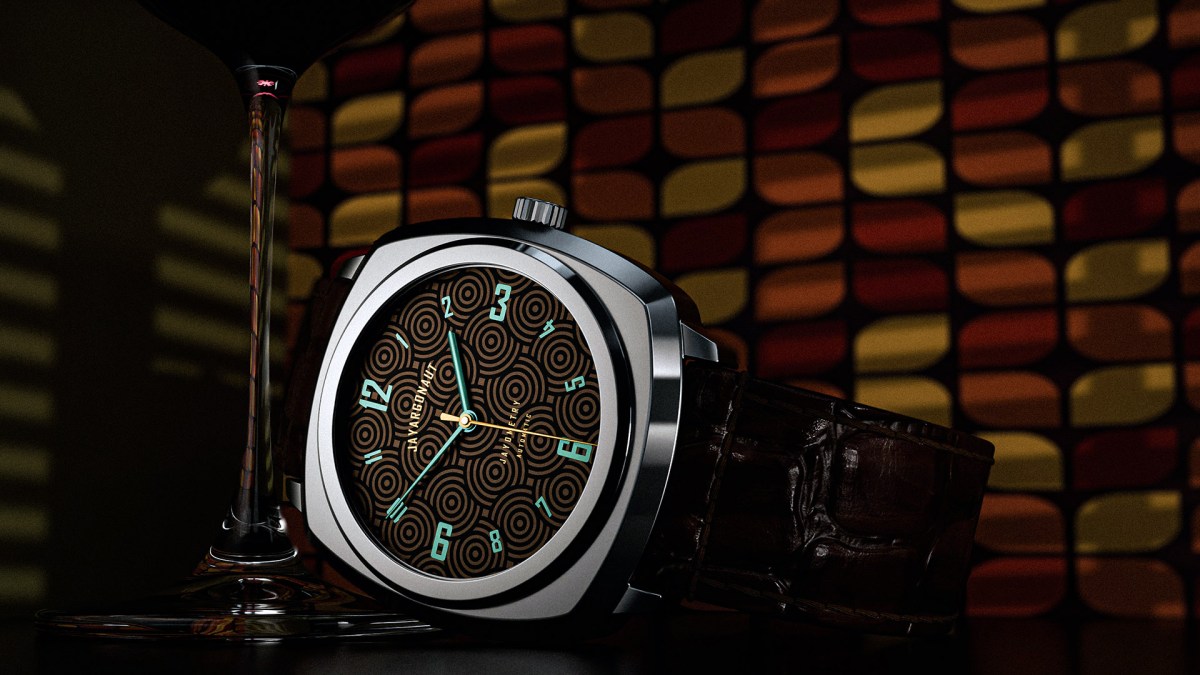
I have been quite occupied recently with the task of designing and developing new watch case models featuring a retro square style. To accomplish this, I have utilized Plasticity 3D CAD design software for modeling the case. Plasticity 3D software is great! It proves to be an excellent tool for creating hard objects, expediting the process compared to my usual go-to platform, Blender. I have successfully finished one case, and I am eagerly looking forward to delving into the intricate details of the other two designs.
I wanted to test out this new case and incorporate it into some 3D watch renders, as well as create concept imagery for a potential design line. To achieve this, I exported the watch case model from Plasticity in .OBJ format to seamlessly integrate it into my workflow in Blender. Once within the Blender environment, I could construct it into a detailed 3D watch model. The primary focus of this particular project was to explore and emphasize the use of simple geometric imagery for the dial backgrounds with a retro 70’s tech feel, aiming to achieve a minimalist yet elegant visual presentation with those lovely colours that were used so well in the 70’s decade.
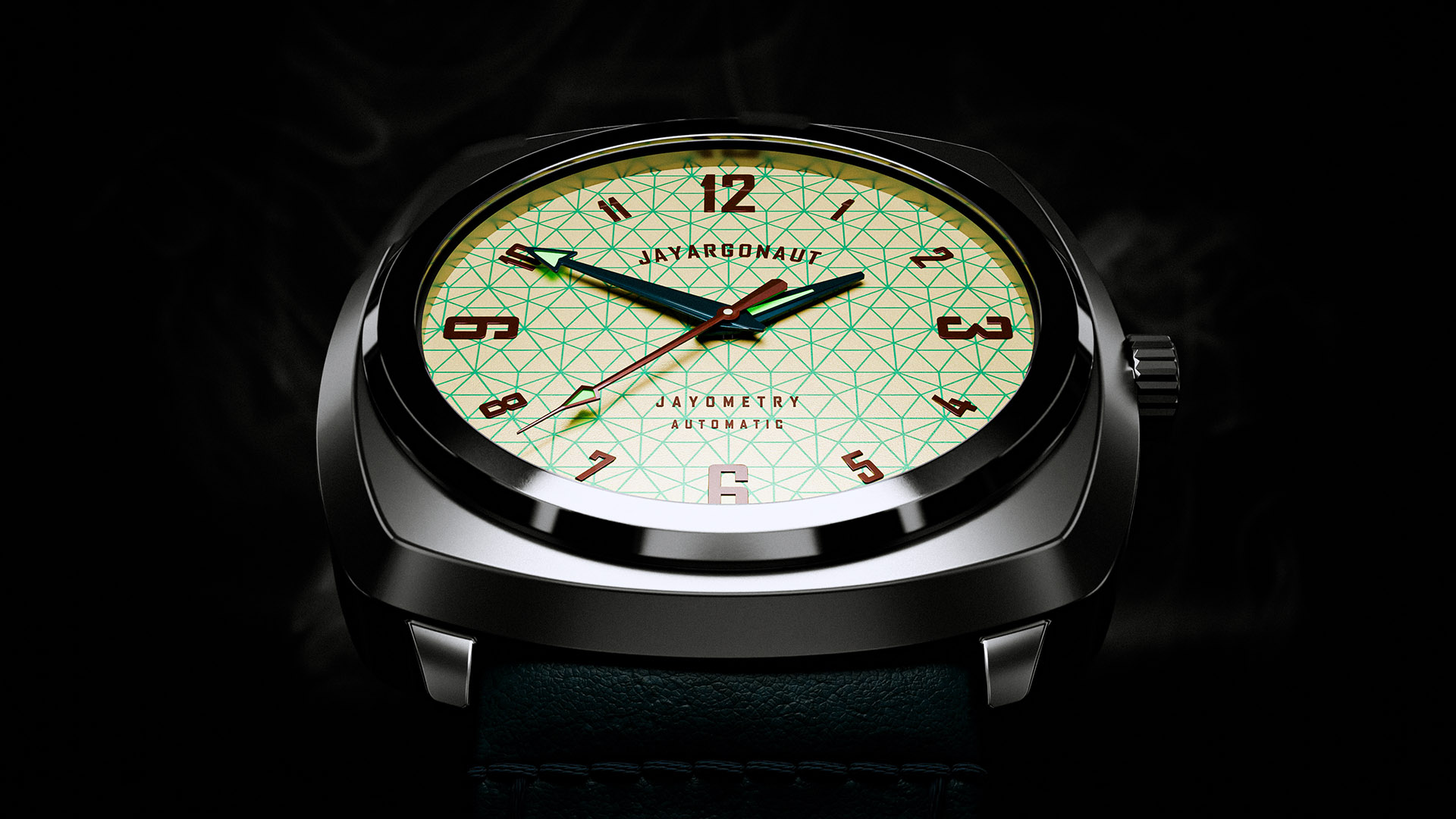
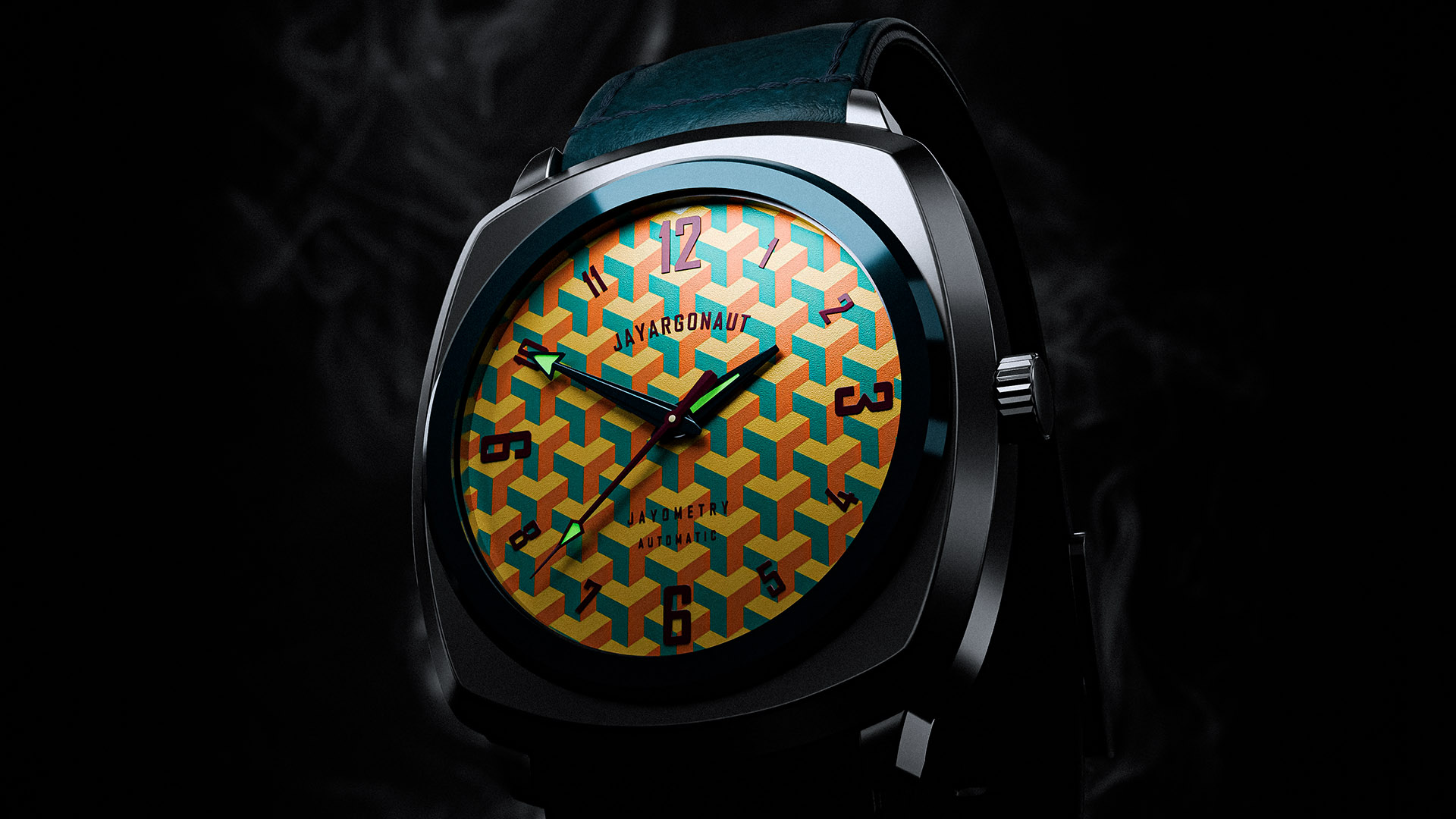
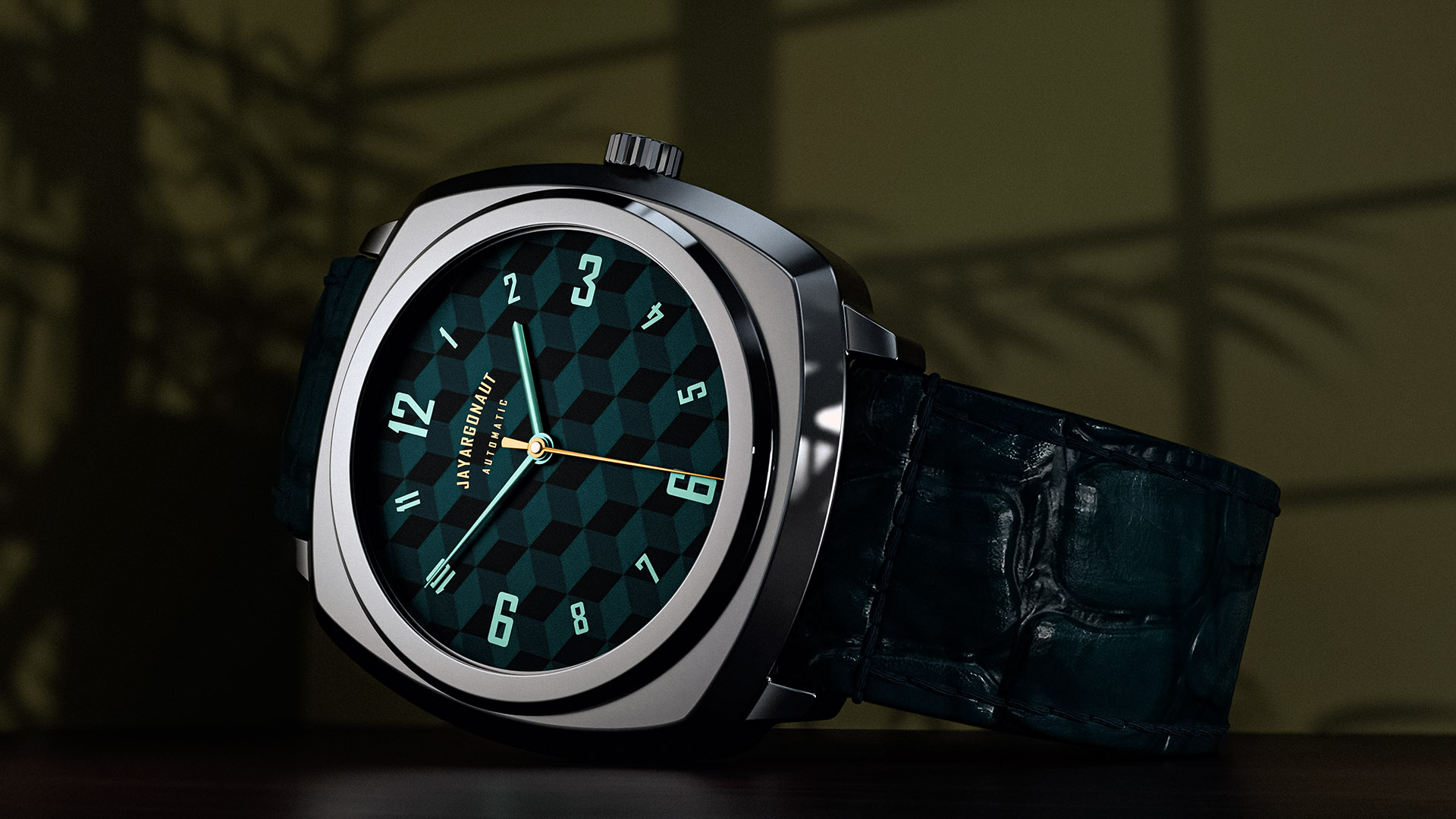
Here are a few of my first rendered concepts utilizing this case, using different geometric designs and lighting set-ups. All of these images are designed, mesh-modeled, lit, and finally rendered by myself in Blender 2.8 using the Cycles render engine:
Traingles – geometry Tile Design:
What I like to call Tee-Cubes:
Cubes-On-Cubes:
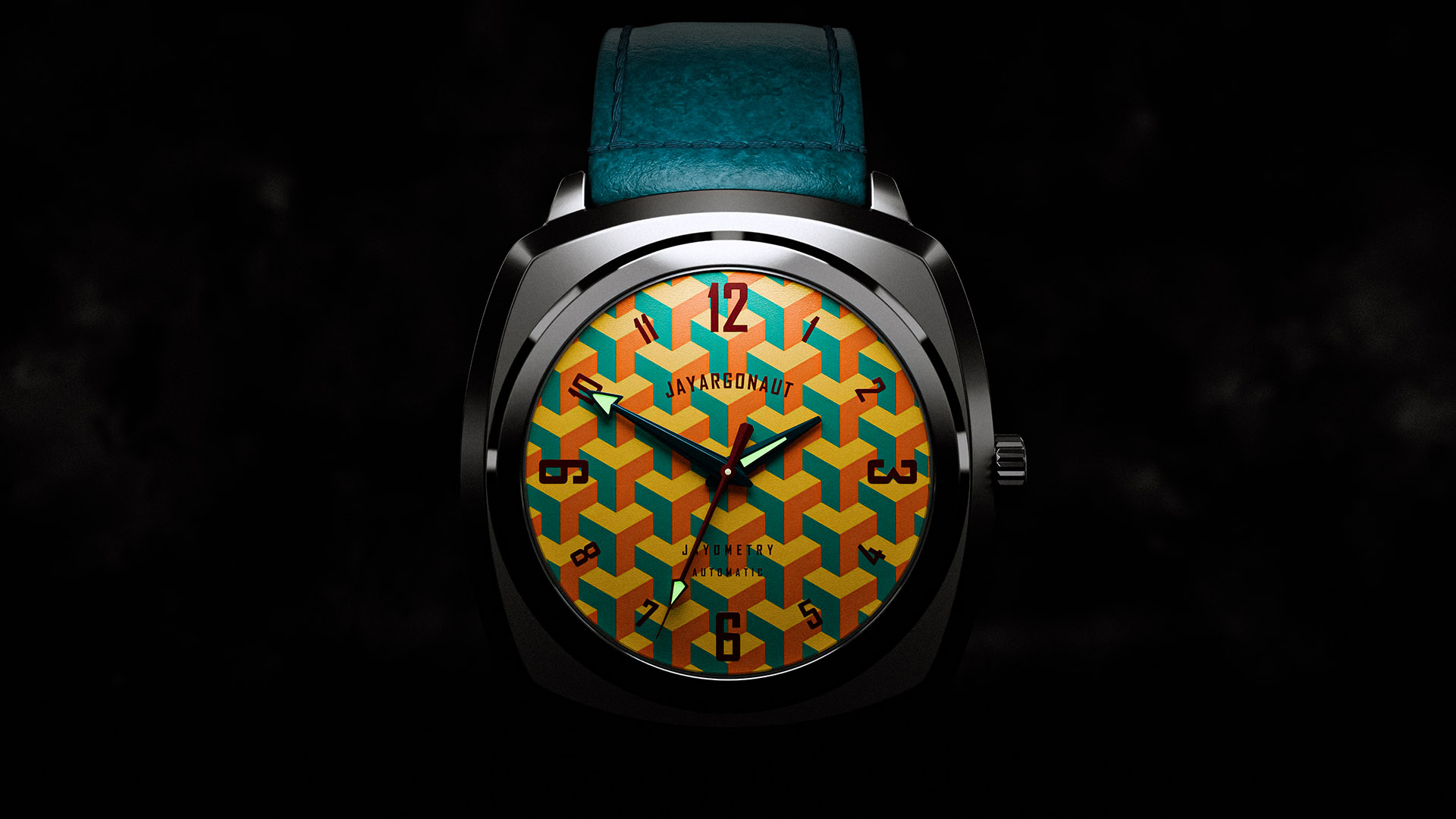
My Favourite – Beautiful Retro Colours:
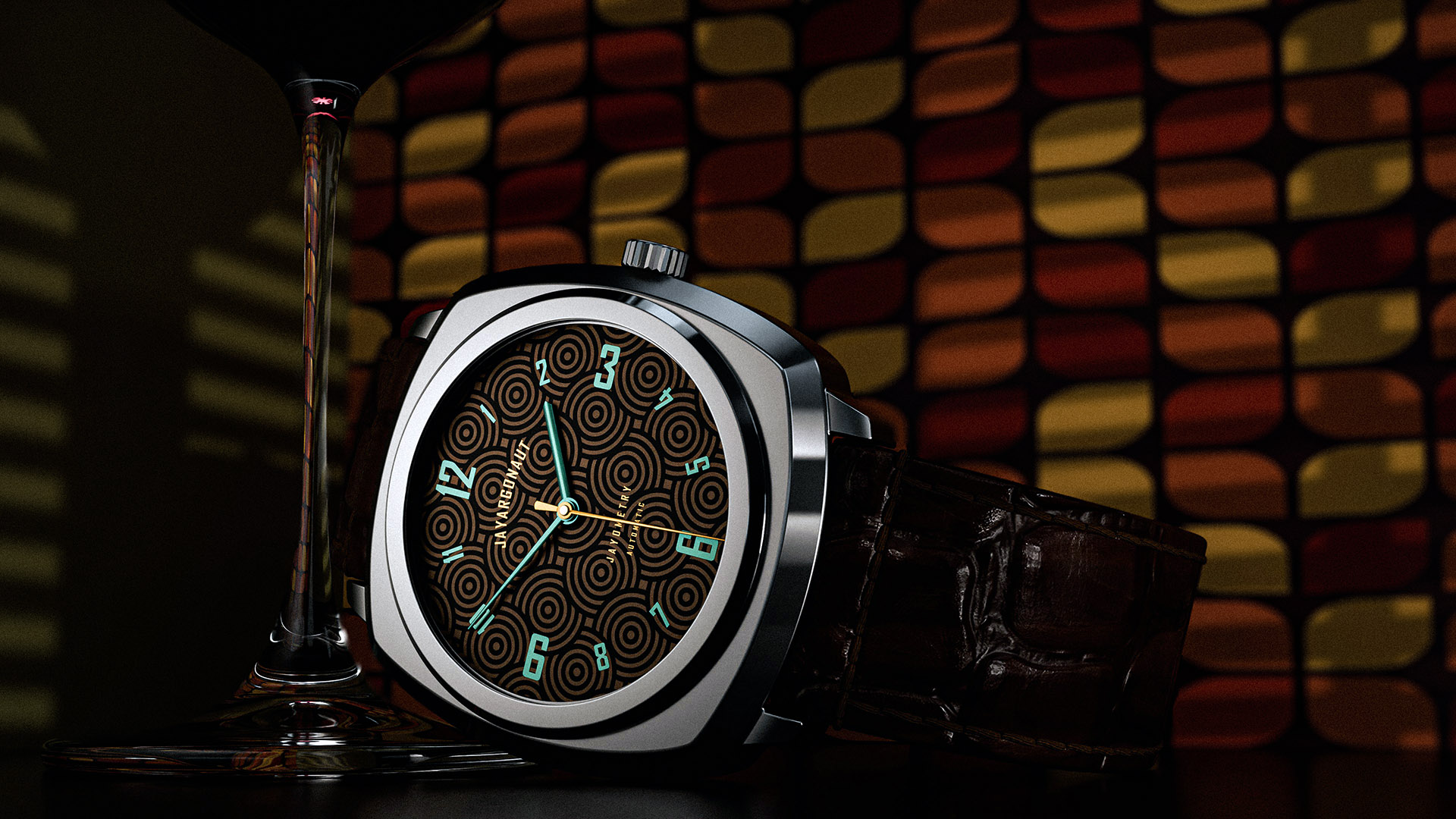
The image above is lit with three primary lights, strategically placed to enhance different aspects of the scene. The first light casts a direct and strong illumination on the front, drawing attention to the central focus of the composition. Meanwhile, the second light delicately highlights the intricate details of the watch strap, adding depth and texture to the overall image. Complementing these, the third light functions as a gobo-light, playing the role of an intermediary source that elegantly creates nuanced shadows and highlights, contributing to the ambience and depth of the entire setup. Together, these lights work in harmony to create a captivating interplay of light and shadow, bringing the scene to life and infusing it with a compelling visual narrative.
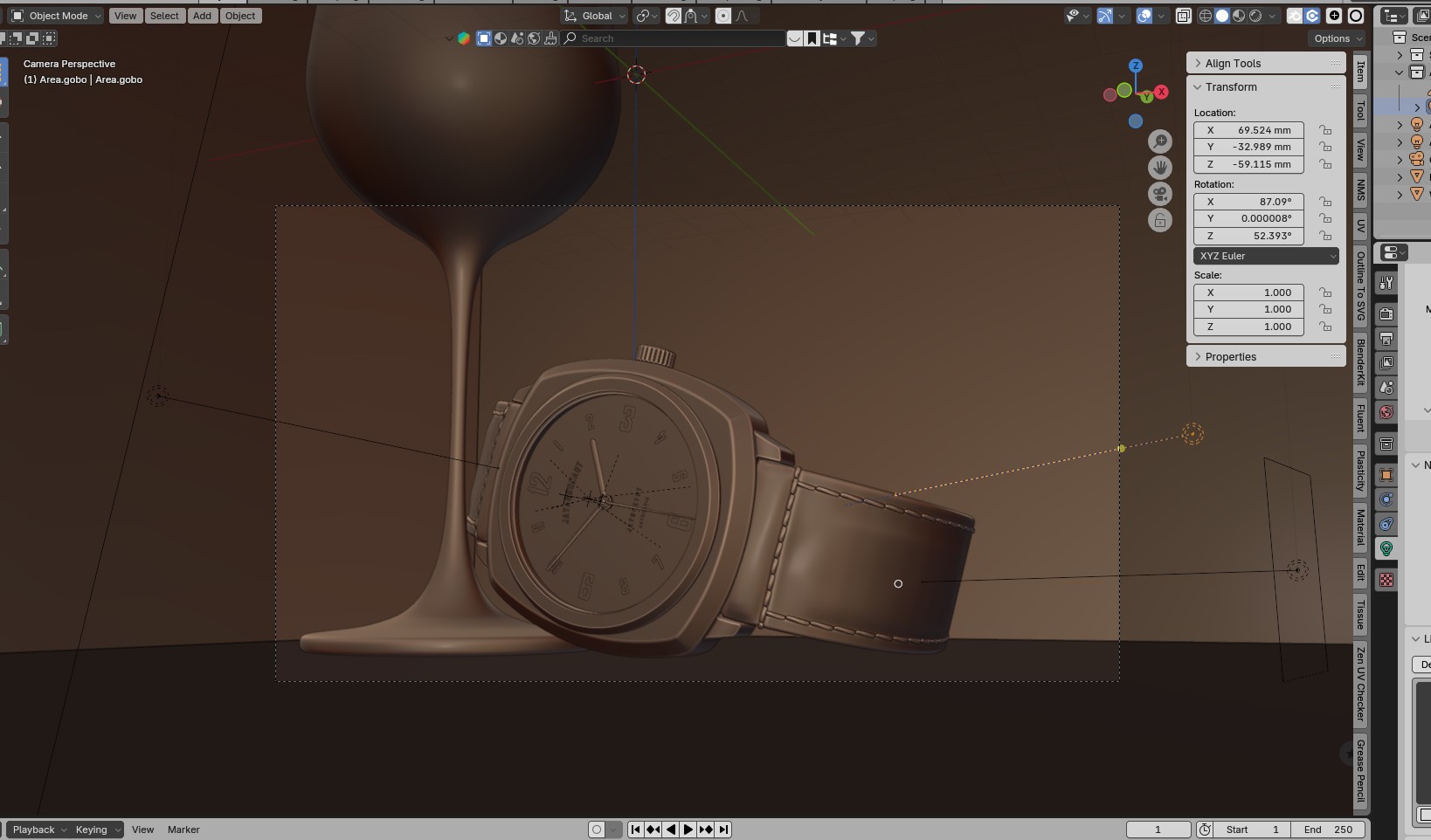
Below is an image of the above scene blocked out with lighting rig, but with no materials and rendering. It gives you an idea of how I blocked out the scene with the object models I had built:
I created the geometric designs for the dials with Adobe Illustrator, conscientiously selecting color palettes and shapes to achieve a cohesive aesthetic. Once the base geometry tile was drawn, Adobe Illustrator made it fairly easy to duplicate the tiles. I applied the designs to the dial object using an image texture node, ensuring seamless translation of each detail onto the final product.
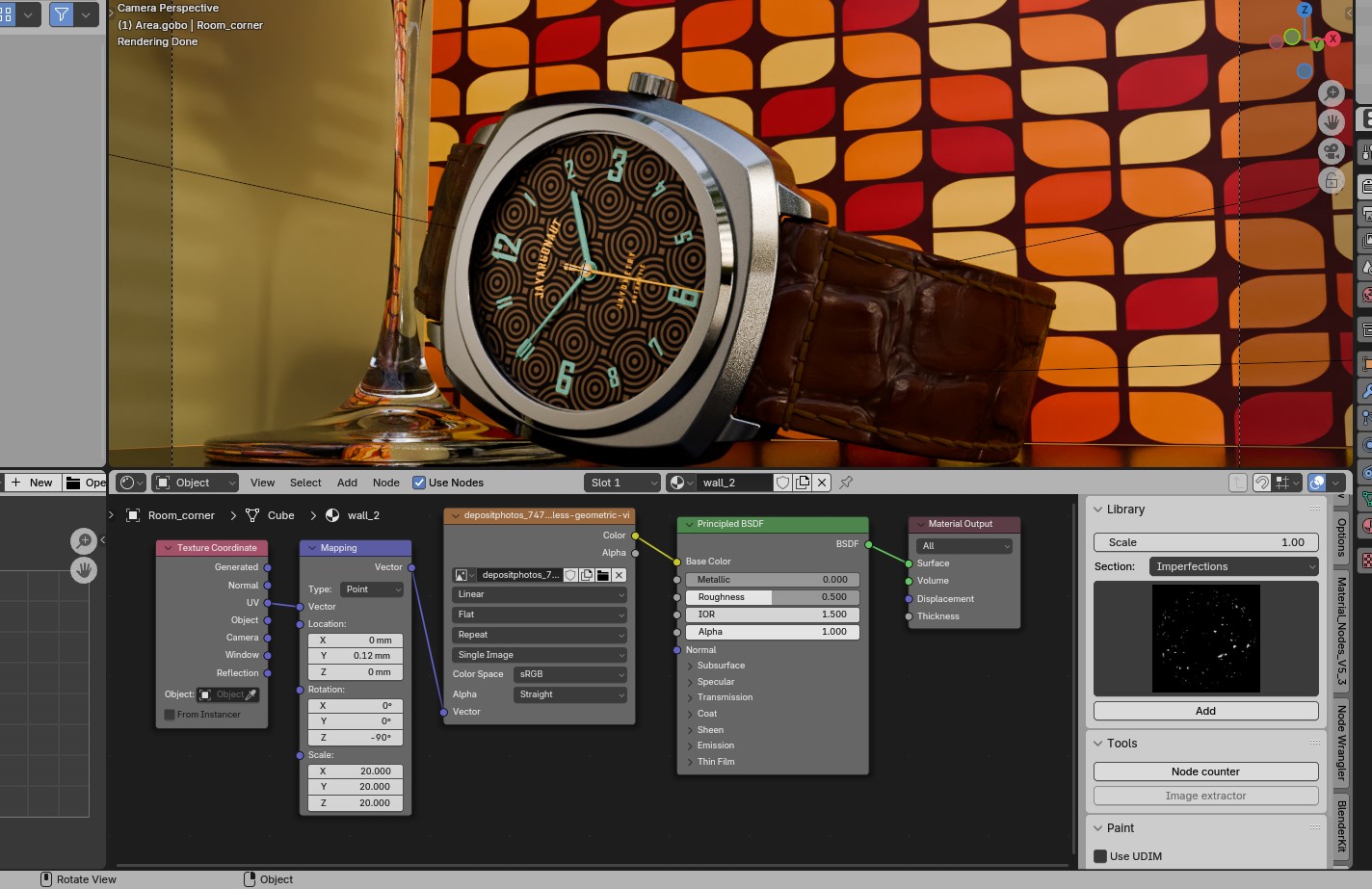
Adobe Illustrator is a great tool for making these type of geometric patterns, allowing for a high degree of precision and control over the design process. I can then export them from Illustrator as an image file, such as a high-resolution PNG, JPEG, or SVG, to use as an image texture in Blender. By customizing the colors, gradients, and shapes in Illustrator, I can create intricate patterns and textures that add depth and visual interest to 3D models in Blender, enhancing the overall quality of the final output.
When I talk about geometric repeating patterns, I am referring to a design that is composed of geometric shapes, such as squares, circles, triangles, or hexagons as seen on the watch dials, arranged in a repetitive manner. These patterns often create a sense of harmony and rhythm, and they have been used in various forms of art and architecture across different cultures and time periods. From ancient Greek mosaics to modern-day wallpapers, geometric repeating patterns continue to be a popular choice for adding visual interest and structure to various surfaces and materials. By understanding the principles of geometry and repetition, designers and artists can create visually captivating compositions that draw the eye and evoke a sense of order and balance.
Using geometric repeating patterns is a crucial element in the vast world of design. It serves as a jumping-off point for various other intricate design processes, some of which I am eager to incorporate, study, and integrate into my upcoming projects. One such fascinating process is tessellation, which involves creating intricate, seamless patterns by fitting together geometric shapes without any gaps or overlaps. I am particularly interested in exploring tessellated tile designs, especially for watch dial base design. The potential for creating visually striking and unique watch faces using tessellation is truly exciting, and I look forward to delving deeper into this captivating design technique very soon!
Until then have a great day all😊
Kind regards, Jay

Discover more from Jayargonaut - Watch Designer
Subscribe to get the latest posts sent to your email.
 Jayargonaut - Watch Designer
Very nice, Jay! Your designs are lovely as usual. I hope you’ve been well 😊
LikeLiked by 4 people
Hi Laura😊. And thank you for those kind words! I am glad you like them. I have eclectic tastes & I am always aware these things are subjective…so lovely is well received!😊 I am good thank you Laura….I hope you are well too☕
LikeLiked by 2 people
Cool designs! And I see you have invented a new math called Jayometry. 🙂
LikeLiked by 4 people
Thank you MagickMermaid😊. I am glad you think they are cool and like them! Ah, you noticed😊! I like it when people notice these details. Yes, I enjoy the novelty and having a bit of fun in my design….Jay
LikeLiked by 3 people
It’s fun to see so many different designs! You’re having fun!
LikeLiked by 4 people
Thank you brilliantviewpoint😊. Yes I am having fun, I must admit I do love this work! It takes a lot of my time, but I do love it! Thank you for your support. Kind regards…Jay😊
LikeLiked by 3 people
Very interesting learning about the concepts of repeating patterns and tessellation. I practice sketching and painting(not a pro) such patterns to relax or meditate. But it was just on a whim I didn’t know that they are real concepts in geometry and art. Your patterns and colour palettes are beautiful!
LikeLiked by 4 people
Hi Ajinkya😊. Thank you, I am glad you enjoyed it. Keep practicing and enjoying it. Yes, geometry has played a big part in many art forms, or at least can do, especially in certain periods of design. It is good to study and a great way to improve our art. I am going to be working a lot with tessellation patterns soon. Escher style tessellations especially, which I love…you should research it. Thanks and kind regards, Jay😊
LikeLiked by 3 people
Oh cool looking forward to it! And yes I will do my research too!
LikeLiked by 3 people
This is genius Jay, very amazing design. Good job my friend Jay.
LikeLiked by 4 people
Thank you so much Freddie! I will take that compliment with humble gratitude😊. I am glad you like them. Thank you my friend for your very kind words…Best, Jay
LikeLiked by 3 people
My pleasure Jay.
LikeLiked by 3 people
Amazing! You’re of the rare breed.
LikeLiked by 3 people
Thank you for that very nice comment Resa😊. I sincerely appreciate it. Many thanks and kind regards…Jay😊
LikeLiked by 3 people
I like your work!
LikeLiked by 3 people
Thank you Resa. Likewise – I have seen your designs and work, they are very impressive! Kind regards, Jay
LikeLiked by 3 people
Likewise!
LikeLiked by 3 people
Excellent informative
post. 🙂🇯🇵
LikeLiked by 3 people
Thank you JP😊. I am glad you enjoyed the post! Kind regards…Jay
LikeLiked by 3 people
Beautiful designs 😊
LikeLiked by 4 people
Thank you Priti😊. I am glad you like them, and I appreciate your support! Kind regards…Jay
LikeLiked by 3 people
👍
LikeLiked by 2 people
SERENA GIORNATA
LikeLiked by 3 people
Thank you WorldPhoto👍. You too…Kind regards, Jay😊
LikeLiked by 2 people
🙂
LikeLiked by 3 people
Great design Jay! You always do such a great job on your designs wow!
LikeLiked by 2 people
Thank you Jesse, I am glad you like them😊. I appreciate your positive words. Kind regards…Jay✌️
LikeLiked by 2 people
You’re welcome they are incredible
LikeLiked by 2 people
Very nice
LikeLiked by 3 people
Thank you Vijay🙏. I am glad you like them and appreciate your positive words. Kind regards, Jay😊
LikeLiked by 2 people